If a tenant walked out and left a washer and dryer in your duplex or rental unit, you need them gone fast — and you want to know exactly what it will cost before anyone shows up. The short answer: removing a single left-behind washer and dryer typically falls at the minimum job fee, around $150, and same-day service is often available. Junk removal in Bala Cynwyd and surrounding areas — including parts of Philadelphia — is what Bala Cynwyd Superior Junk Removal has handled for over 20 years.
Need those appliances out today? Call Bala Cynwyd Superior Junk Removal at +1 610-795-2362 for upfront pricing and same-day availability. Licensed, insured, and ready to roll.
What It Costs to Remove a Left-Behind Washer and Dryer
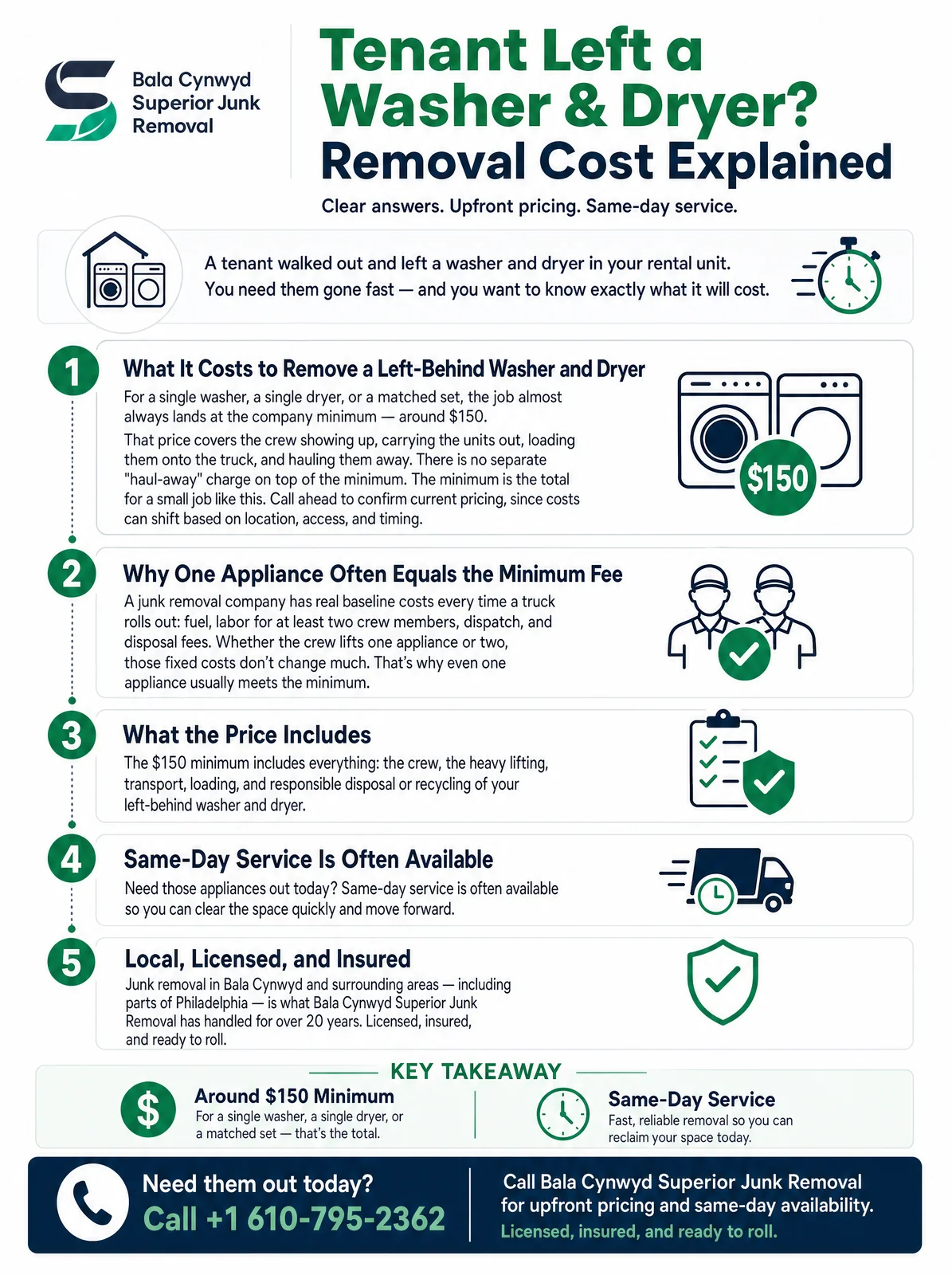
For a single washer, a single dryer, or a matched set, the job almost always lands at the company minimum — around $150. That price covers the crew showing up, carrying the units out, loading them onto the truck, and hauling them away. There is no separate “haul-away” charge on top of the minimum. The minimum is the total for a small job like this.
One caller asked it exactly the right way: “How much more would it be to actually take it?” The answer was clear — the $150 minimum covers the pickup. Call ahead to confirm current pricing, since costs can shift based on location, access, and timing.
Why One Appliance Often Equals the Minimum Fee
A junk removal company has real baseline costs every time a truck rolls out: fuel, labor for at least two crew members, disposal or recycling fees, and insurance. Those costs exist whether the job is one washing machine or a full truckload. So a single-item pickup is priced at the floor — the minimum — not at a per-pound or per-item rate below that floor. The minimum isn’t an extra charge added on top of removal. It simply reflects what it actually costs to operate a professional crew for the smallest possible job.
When the Price Goes Above the Minimum
A few things push the cost higher than the minimum fee:
- Multiple appliances — a washer, dryer, old refrigerator, and a chest freezer all in the same unit
- Stairs or tight hallways in a multi-floor duplex that require extra labor
- Additional junk left behind alongside the appliances — furniture, bags, boxes
- Volume overall: pricing scales with how much truck space the load takes up
If the tenant left more than just appliances, the total will reflect the full load. A quick phone call before scheduling gives you an accurate number.
Who Is Responsible When a Tenant Leaves Appliances Behind
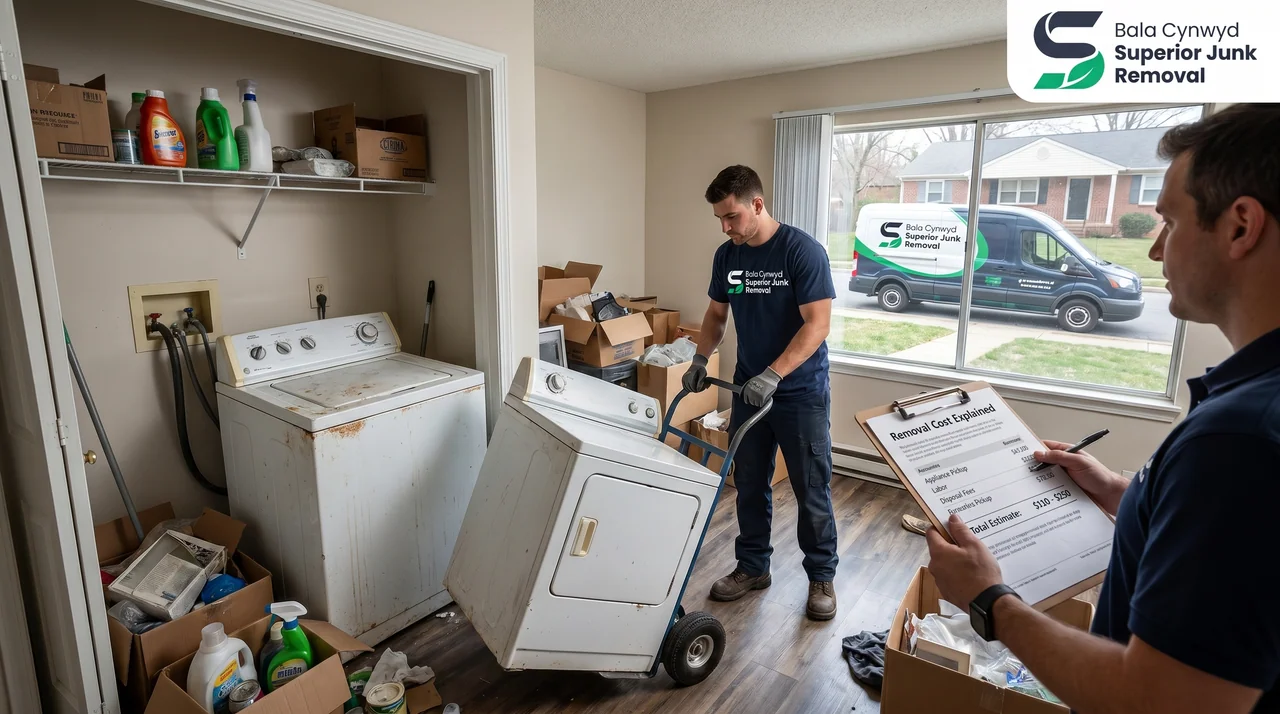
Once a tenant vacates — voluntarily or otherwise — any property they leave behind generally becomes the landlord’s or property manager’s problem to resolve. Landlord-tenant rules vary by state and municipality, so it is worth a quick check on Pennsylvania’s specific guidelines before disposing of abandoned property. In practice, most property owners want the unit cleared quickly so they can re-rent it, and waiting on legal nuance costs more in lost rent than the removal itself.
Property owners and managers are among the most common clients for this kind of call. The scenario is straightforward: the unit needs to be empty and ready for the next tenant, and a washing machine in the laundry room is in the way.
How Same-Day Appliance Pickup Works
The process is designed to be hands-off for you. Here is what happens from call to clear:
- You call, describe the items and location, and get a price confirmed upfront.
- You pick a time window — often the same day you call.
- A two-person crew arrives, locates the appliances, and handles all the heavy lifting.
- They carry the units out, load the truck, and leave the space clean.
- You do not touch anything.
For a landlord trying to turn over a unit fast, same-day service is the difference between re-listing this week or next. The crew is used to navigating duplex layouts, narrow hallways, and basement laundry rooms.
What to Do Before the Crew Arrives
A little prep makes the job smoother and faster:
- Clear a path from the appliances to the nearest exit if you have access to the unit.
- Unplug the dryer and shut off the water supply to the washer if you can do so safely.
- Flag any gas connections — a gas dryer line needs to be noted so the crew can handle it properly.
- Let the crew know about stairs, tight doorways, or parking restrictions at the property.
You do not need to disconnect everything yourself. Just give the crew a heads-up on anything unusual about the access.
Where Old Appliances Go After Removal
Washers and dryers are largely metal, and metal gets recycled. Most appliances that are picked up go to recycling facilities where steel, copper wiring, and other materials are recovered rather than sent to a landfill. When an appliance is still in working condition, donation to a local organization is another path — keeping a functional machine out of the waste stream entirely.
Responsible disposal matters, and a reputable removal company handles that side so you do not have to track it yourself.
Doing It Yourself vs. Hiring a Crew
| Factor | DIY Removal | Professional Crew |
|---|---|---|
| Heavy lifting | You and whoever you can find | Two-person trained crew |
| Truck/equipment | Rent a truck, load it yourself | Included in the fee |
| Disposal fees | Separate dump or recycling fee | Included or confirmed upfront |
| Gas/water disconnection | Your responsibility — safety risk | Crew handles with proper care |
| Timing | When you can arrange it | Same-day available |
| Injury risk | High — washers and dryers are heavy | None for the property owner |
For a single appliance, the math often favors hiring a crew once you factor in truck rental, your time, and the physical risk of moving a 200-pound machine down a flight of stairs. Gas dryer connections in particular are not something to improvise.
Getting a Quote and Scheduling Pickup
The fastest way to confirm the exact cost and get something on the schedule is a quick phone call. Just like the caller who said, “Let me call back to make sure we can set it up” — the process really is that simple. Describe the items, confirm the address, and get a time. Bala Cynwyd Superior Junk Removal is licensed and insured, has been serving this area for over 20 years, and quotes prices transparently before anyone drives out.
Call +1 610-795-2362 to confirm availability and lock in a time. You can also contact us for a free quote online.
Frequently Asked Questions
How much does it cost to remove just a washer and dryer?
For a standard washer and dryer with normal access, expect to pay around the minimum job fee — approximately $150. Call ahead to confirm current pricing for your specific address and situation.
Is the minimum fee on top of the removal cost, or does it cover it?
The minimum fee covers the removal. It is not an add-on charged on top of a separate haul-away fee. For a small single-item job, the minimum is the total price you pay.
Can you remove an appliance the same day I call?
Yes. Same-day service is often available, subject to crew scheduling and your location. When a caller was told “I can send somebody today,” that reflects how the company normally operates — call early in the day for the best chance of same-day pickup.
Do you pick up appliances from rental properties and duplexes?
Yes, including items tenants leave behind. Bala Cynwyd Superior Junk Removal serves Bala Cynwyd and surrounding communities, including parts of Philadelphia. Property owners and managers are regulars. If you need help across a wider area, check the areas we serve page for full coverage details.
Do I need to disconnect the washer and dryer before the crew arrives?
It helps, but it is not required. Unplugging the dryer and shutting off the washer’s water supply speeds things up. If there is a gas dryer connection, flag it when you call — the crew will handle it safely, but they need to know in advance.
What happens to the old appliances after removal?
Appliances are typically sent to recycling facilities where metal and components are recovered. Working units may be redirected for donation. Either way, the goal is to keep usable materials out of the landfill whenever possible.