
Yes, dirt and sod removal is something we do, and the pile doesn’t have to sit at the curb first. Dirt left over from an above-ground pool dig can stay in the backyard until we arrive. What decides the job is how that dirt travels from the pile to the truck. A few photos are the fastest way to find out.
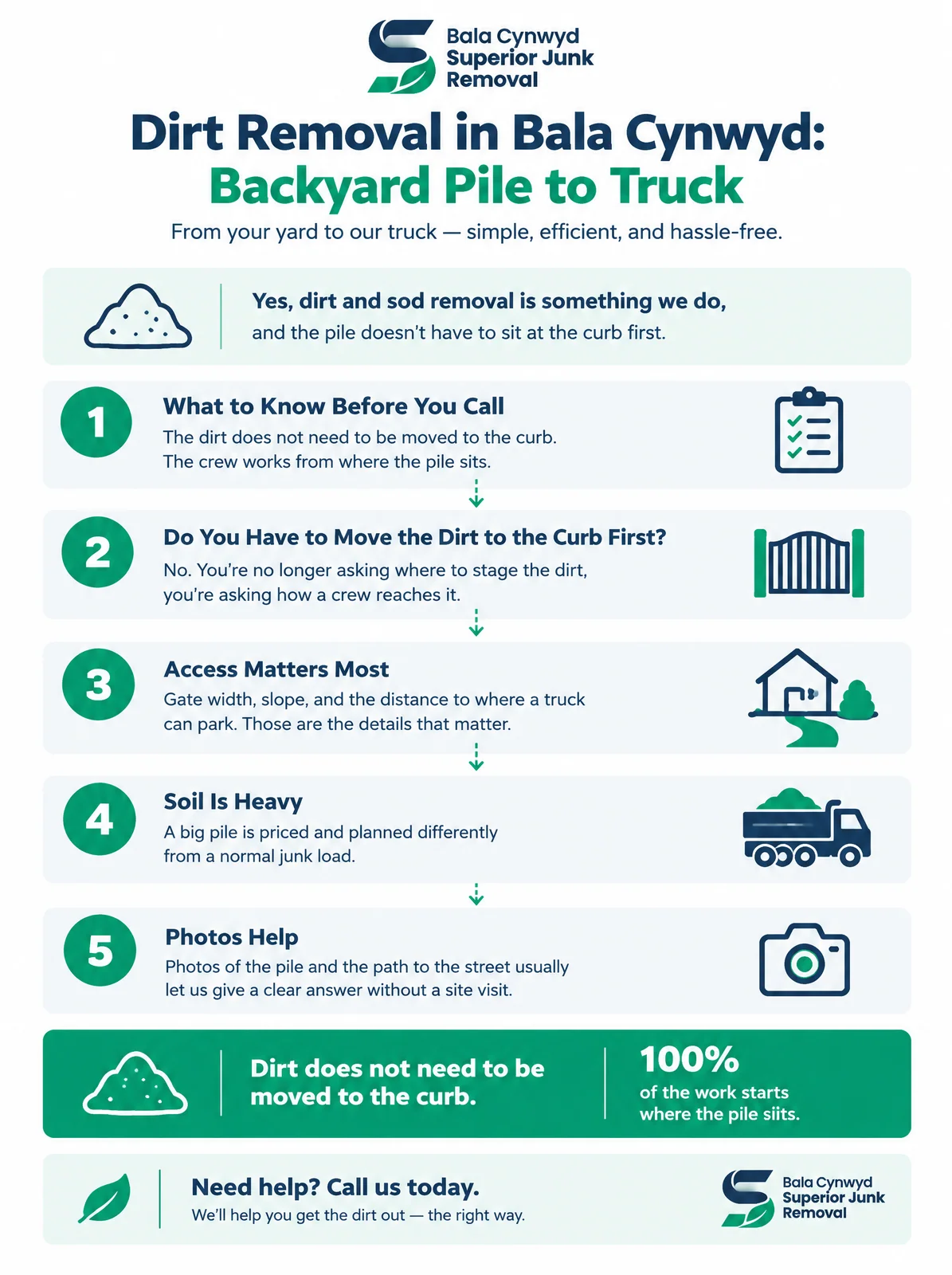
What to know before you call
- The dirt does not need to be moved to the curb. The crew works from where the pile sits.
- Access matters more than almost anything else: gate width, slope, and the distance to where a truck can park.
- Soil is heavy, so a big pile is priced and planned differently from a normal junk load.
- Photos of the pile and the path to the street usually let us give a clear answer without a site visit.
Do You Have to Move the Dirt to the Curb First?
No. Someone who called us recently, mid-way through an above-ground pool install, asked exactly this, and the answer was the same one you’ll get now: it doesn’t need to be on the curb.
That changes the question. You’re no longer asking where to stage the dirt, you’re asking how a crew reaches it. Gate, driveway, side yard, the spot where a truck can sit. Those are the details that matter.
A curb pile wouldn’t help anyway. Loose soil spread along the street is a mess for your neighbors, and when the volume is large, moving it there just doubles your work. Most junk removal in Bala Cynwyd, ours included, is built around crews carrying things out of a home or yard, and dirt follows the same logic. We start where the material is.
How Dirt Gets From the Backyard to the Truck
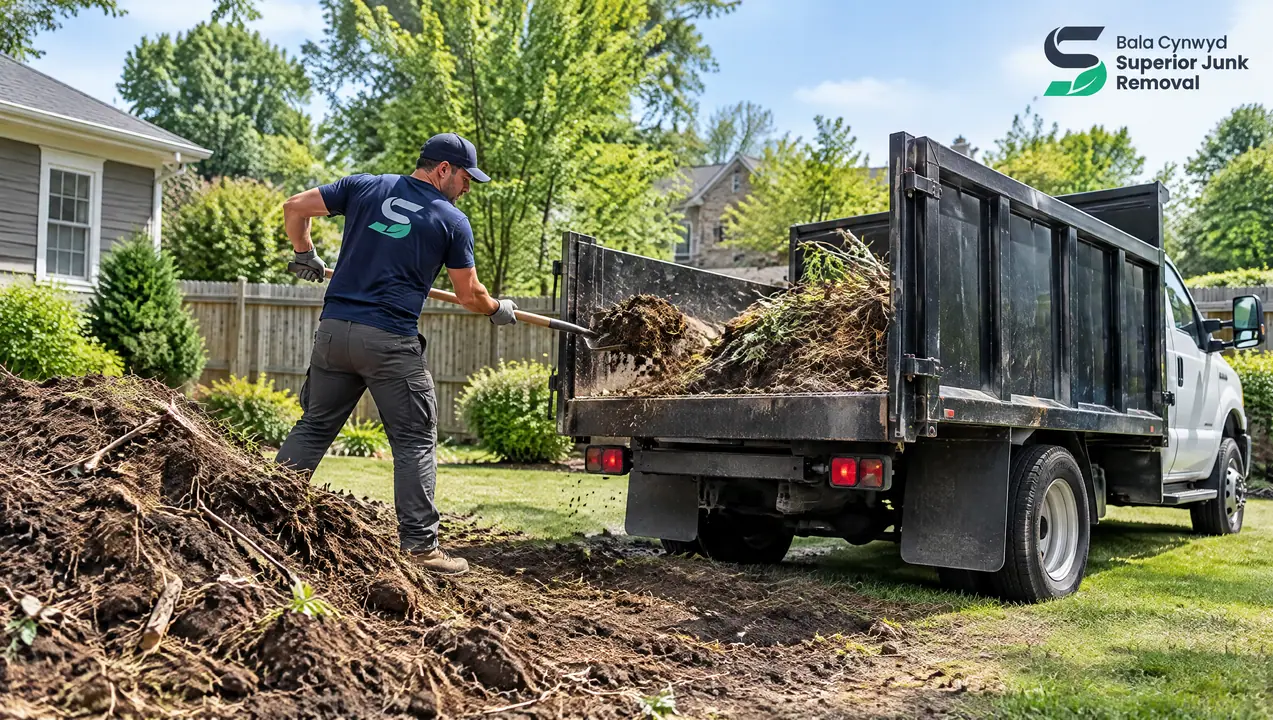
There are two ways to move a pile of soil: by hand and with a small machine. Which one fits depends on the size of the pile and the path out of your yard.
The caller asked whether we’d bring a Bobcat or something similar. Fair question. We won’t promise a specific machine in an article. What we can tell you is that we confirm the method after seeing photos of your pile and path, and if a piece of equipment isn’t part of the plan, you’ll hear that up front rather than on the day.
Hand-Loading: What “A Lot of Wheelbarrows” Really Means
That was the caller’s fallback plan, and it’s a realistic one for small jobs. Soil is dense. A wheelbarrow of it is a real workout, and a pile that took a digging crew a day or two to create doesn’t shovel away in an afternoon.
Hand-loading works best when the pile is modest and the route to the truck is short and flat. Past that, it gets slow and punishing. If you’re already mid-project and tired of looking at the mess, you don’t need to wear yourself out on it.
When a Small Machine Makes Sense
For a very large pile, a compact loader of the skid steer type is often the practical tool. It needs room to get in, though, which means a wide enough gate or a clear side yard, and ground that can take the weight without being torn up.
Here’s the tradeoff. A machine can finish a big pile much faster, but it asks more of your yard. Soft or wet ground, a freshly dug pool area, or a narrow gate can rule it out. Then it goes back to hand-loading, and the job takes longer.
| Factor | Hand-loading | Small loader |
|---|---|---|
| Best for | Small to moderate piles | Large piles |
| Path needed | Any route a wheelbarrow can roll | Wide gate or open side yard |
| Effect on lawn | Light | Heavier, especially on soft ground |
| Speed | Slower | Faster |
What Makes a Backyard Easy or Hard to Reach
Walk your yard the way a crew would. You’re looking for whatever slows a loaded wheelbarrow or blocks a machine.
- Gate or side-yard width at the narrowest point
- Slope between the pile and the driveway
- Fences, steps, or planters along the route
- The distance from the pile to where a truck can legally park
- Soft or wet ground, which gets rutted fast
- Pool materials or equipment stacked in the way
Our crews have seen plenty of yards where the dirt was never the hard part. The route out was.
How Much Dirt Is an 11 x 14 Pile Four Feet High?
Those were the caller’s numbers, and they make a good worked example. Multiply 11 by 14 by 4 and you get 616 cubic feet. Divide by 27 and that’s roughly 23 cubic yards, if the pile were a perfectly squared block.
It isn’t. Piles are mounded and taper toward the top, so the real figure is lower. Treat all of this as approximate, since measuring a heap by eye is never exact. Still, even the lower number is far beyond a pickup-truck load of yard waste.
Why Dirt Is Different From Regular Junk
Weight. A couch fills a truck bed with air. Soil fills it with mass. For dirt, the weight of a load and the cost of disposing of it often matter more than how much space it takes up. That’s also why nobody can quote a pile like this blind.
Why a Big Pile May Take More Than One Trip
A large soil pile can mean several loads, depending on the truck and where the dirt is taken. We won’t guess a trip count here. After we see photos, we can tell you what to expect.
What to Send for an Accurate Estimate
On the call, the offer was simple: we can come out to look, or you can send photos. Most people choose photos, and it works well when the photos show the right things.
Photos and notes to gather before you text us
Text your photos to 6107952362 and we’ll reply with how the dirt would be moved. An on-site visit is also an option if you’d rather have someone walk the yard.
If you’re in one of the small towns just outside Bala Cynwyd, check the areas we serve or ask us directly. We’d rather confirm than guess.
What Affects the Price of Dirt Removal
We aren’t going to quote a number in an article. Here is what moves it, so you know what you’re paying for.
- Volume of the pile
- Weight, and the disposal fees that come with it
- How far the crew has to carry or load
- Whether equipment is needed to reach the pile
- What’s mixed in: sod, roots, rocks, or debris
Clean soil is usually simpler than a pile with roots, rocks, and bits of liner in it. Mention what’s in there when you send photos. You get the price upfront, after we’ve seen what we’re dealing with, and no surprise line items later.
What if my pile has construction scraps in it?
Pool installs sometimes leave behind wood, plastic, or packaging mixed into the dirt. That’s a different kind of load. Our construction debris removal covers that side of a project, so tell us what’s in the pile and we’ll sort out the right plan.
Where the Dirt Goes Afterward
Clean soil and sod can often be reused or taken to a site that accepts fill, which keeps them out of the trash stream. Mixed material may need to go somewhere else. We’ll tell you where your load is headed when we talk through the job.
Before You Hire Anyone: Ask Your Pool Installer About the Dirt
Check your installation contract first. Some include hauling away the excavated soil, and some don’t. Others leave the dirt with you, in which case it’s worth asking whether part of it could go toward leveling or regrading your own yard.
Five minutes with the contract can save you from paying twice.
Send Photos and Get a Straight Answer
Here’s what to do next. Take the photos from the list above, measure the pile roughly, and note anything mixed in. Then send it all over so we can tell you how the dirt would get from your backyard to the truck, and what that would cost.
Text your pile photos to 6107952362, or send us a message with the details. We’ll answer honestly about the equipment and the route.
FAQ
Do I need to put the dirt at the curb for pickup?
No. We work from wherever the dirt sits. What matters is whether the crew can reach the pile from the backyard.
Can you give me a quote from photos alone?
Usually, yes. Clear photos of the pile, the path, and the gate answer most of what we need. If the yard is tricky, a quick visit is the alternative.
Do you take sod as well as dirt?
Yes. If the sod comes with roots, rocks, or other debris, mention it when you send photos so the load is planned correctly.
Will you need a Bobcat to get dirt out of my backyard?
It depends on the size of the pile and your access. Small piles can be hand-loaded, while a pile the size of the one in this article may call for a machine. Your photos help us decide, and we’ll tell you the plan before the crew arrives.
How many truckloads is a pile about 11 x 14 feet and 4 feet high?
Roughly 23 cubic yards if it were a squared block, and less for a real mounded pile. The actual trip count depends on the truck and the disposal site, so we confirm it after seeing the pile.
Can I just haul it to the curb myself in wheelbarrows or buckets?
For a small amount, sure. For a pile this size, it’s impractical, and the curb isn’t a pickup point for this kind of material anyway. Local rules can vary, so check with your township before leaving anything in the street.
Can the dirt be reused instead of thrown away?
Sometimes. Clean soil can be used on your own property or taken somewhere that accepts fill. Ask us when you send photos, and we’ll tell you which options fit your load.