
If you’ve never hired a junk removal company before, the pricing model can feel a little unclear — especially when you’re not sure how much stuff you actually have. The good news: most professional junk removal services, including providers offering junk removal in Bala Cynwyd and across the Main Line area, charge by the truckload. That means pricing is based on the volume of debris your items take up in the truck — and the final price is always confirmed on-site before any work begins. This guide walks you through exactly how that works, what to expect on the day of your pickup, and how to prepare so there are no surprises.
What “Pricing by the Truckload” Actually Means
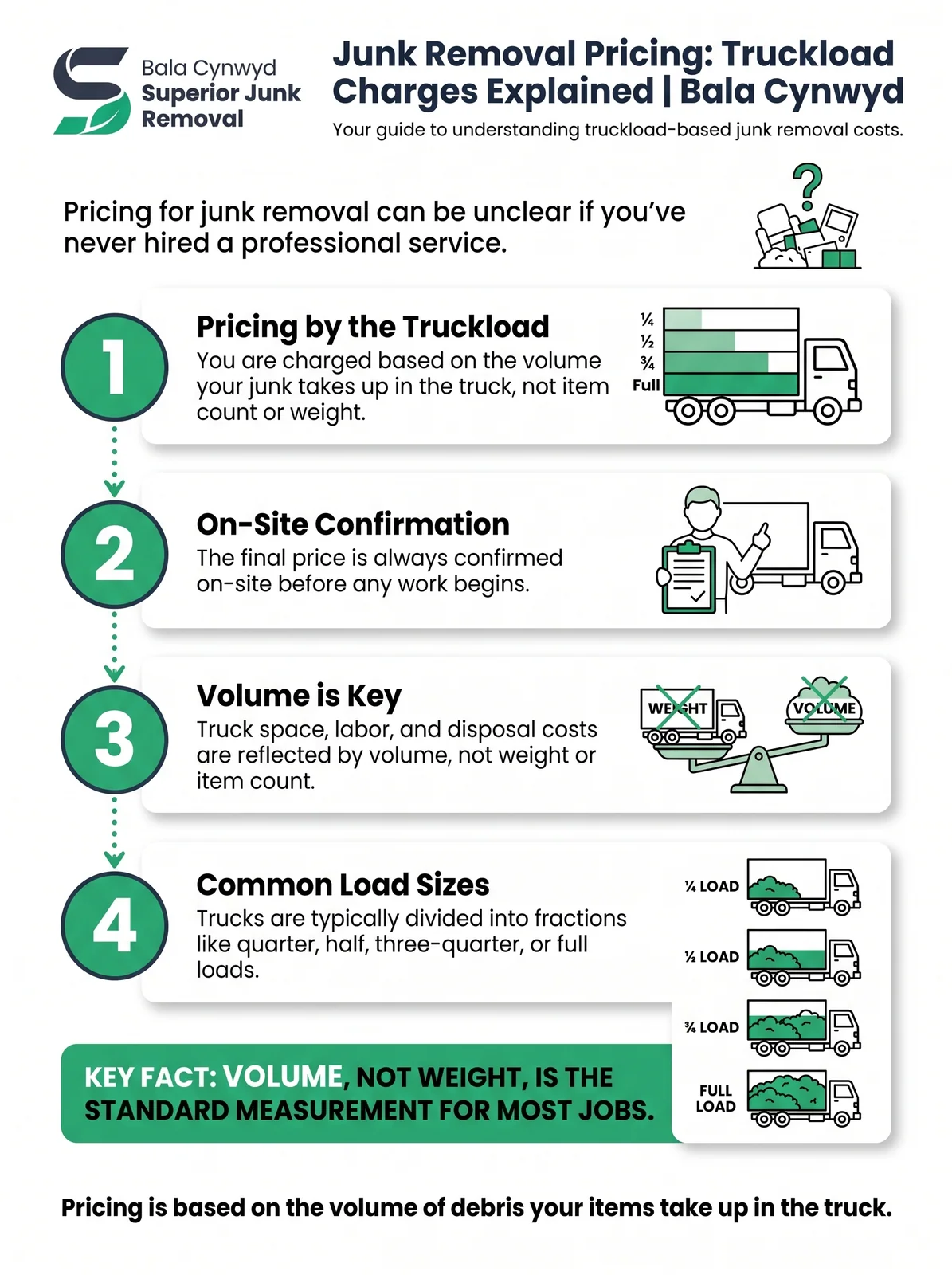
Truckload pricing is straightforward once you understand the concept: you’re charged based on how much of the truck your junk fills, not how many items you have or how much they weigh. The truck is divided into fractions — typically a quarter load, half load, three-quarter load, or full load — and you’re billed for the portion you actually use.
This model makes sense for most residential and renovation jobs because it reflects the real cost of the service: truck space, labor, and disposal. Even customers who have used junk removal services before (or whose family members have) are sometimes fuzzy on the details. Volume — not weight, not item count — is the standard measurement for the majority of jobs.
Common Load Sizes and What Fits in Each
To give you a sense of scale, here’s a rough breakdown of what typically fits into each load fraction. Note that exact cubic yard capacities can vary by truck size — confirm with your provider when booking.
| Load Size | What It Typically Holds | Example Items |
|---|---|---|
| Quarter Load | Small clearout or single-room items | A few pieces of furniture, small appliances, boxes of clutter |
| Half Load | Medium cleanout or partial renovation debris | Several furniture pieces, a set of old cabinets, mixed household junk |
| Three-Quarter Load | Large room cleanout or mid-size demo debris | Garage contents, deck boards, multiple appliances |
| Full Load | Whole-home cleanout or significant renovation debris | Porch demolition materials, awnings, exterior remodeling debris, lumber stacks |
Why Volume-Based Pricing Is Fair for Renovation Jobs
Renovation debris — like porch lumber, old awnings, and exterior remodeling materials — is often bulky but surprisingly light. Weight-based pricing (common with dumpster rentals) can actually work against you in these situations, because light-but-large items take up real truck space even if they don’t tip the scales. Volume pricing reflects the physical reality of what you’re getting rid of. For homeowners working through a porch redo or exterior project, this typically results in a fair, predictable charge based on what actually gets loaded.
How the Price Is Confirmed Before Work Begins
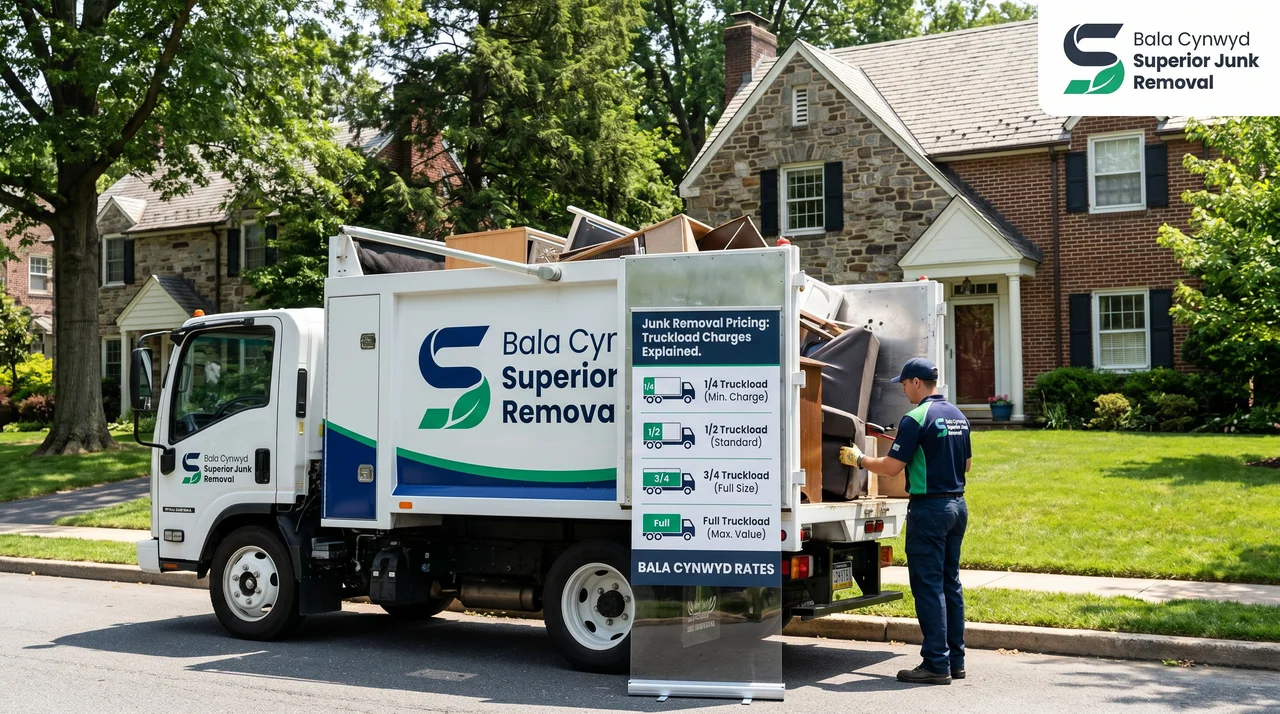
Here’s one of the most important things to understand: your booking estimate is not your final charge. When the crew arrives, they assess the pile, quote a load size, and you approve it before a single item is loaded. This on-site confirmation step protects you from paying for space you didn’t use.
When you book over the phone — especially if you’re unsure of your volume — the dispatcher may log your job as a “full load” simply to reserve a slot in the schedule. That’s a planning placeholder, not a commitment. The actual charge is always based on what the crew sees when they arrive.
What Happens If Your Junk Is Less Than a Full Load
You pay for what you have. If the crew shows up and your pile turns out to be a half load, that’s what you’re charged. There’s no penalty for booking conservatively or for being unsure about volume ahead of time. The on-site quote is the real quote.
What Happens If You Have More Than One Truckload
Multi-load jobs are more common than you might think — especially for demolition and renovation projects that generate debris in stages. It’s entirely normal for a crew to complete one load and come back for a second, sometimes the same day. Pricing simply scales per load. If you know your project is large, mention it when booking so the team can plan accordingly.
For larger or more complex projects, services like construction debris removal are specifically designed to handle multi-load renovation work efficiently.
Scheduling: How Fast Can You Book?
Most reputable local junk removal companies offer same-day or next-day availability for residential jobs. When you call, expect to choose between morning and afternoon time windows — typically something like a 10 a.m. slot or a later afternoon option depending on the day’s schedule.
Choosing a Time That Works Around Contractors
If a contractor is actively working on your property, don’t book the junk removal crew for the same early window. The smarter move is to schedule your pickup for after the contractor has finished and piled the debris in an accessible spot outside — driveway, curb, or front yard. Pushing your appointment to the afternoon (say, 1 p.m. instead of 10 a.m.) gives the contractor time to wrap up and ensures the junk removal crew isn’t waiting around or working around an active job site. This is a small scheduling detail that makes the whole process go much more smoothly.
Same-Day vs. Scheduled Appointments
Urgent same-day calls are great for unexpected cleanouts or when a contractor finishes early. Scheduled next-day appointments give you more flexibility to prepare — you can stage debris, double-check what you’re removing, and coordinate with anyone else involved in the project. Both options are typically available through a single phone call.
What to Have Ready Before the Crew Arrives
A little preparation goes a long way. The most common concern homeowners have is making sure everything is ready so the job goes quickly and the load size is accurate. Here’s a simple checklist:
- Pile all debris in an accessible outdoor location — driveway, curb, or front yard works best
- Make sure the contractor’s portion of the work is finished before the crew arrives
- Separate anything you want to keep clearly from what’s being hauled away
- Be available on-site when the crew arrives so you can approve the load size quote before loading begins
- Have your preferred payment method ready (cash, check, or card)
Items Commonly Removed During Renovation Cleanouts
Renovation cleanouts vary widely, but some of the most common items hauled during exterior and structural projects include:
- Porch decking and structural lumber
- Old awnings and canopy frames
- Deck boards and fencing
- Drywall, plaster, and old fixtures
- Gutters, siding, and exterior trim materials
- General construction debris from remodeling work
For jobs tied to larger projects, it’s worth exploring light demolition services as well, which can handle material breakdown before hauling.
Items That May Not Be Accepted
Standard industry exclusions typically include hazardous materials such as paint, chemicals, solvents, asbestos-containing materials, and certain electronics. Always verify directly with your junk removal provider which specific items they accept or exclude before booking — policies vary by company and locality.
Payment Methods
Most junk removal companies keep payment simple and flexible. For local Main Line providers, payment options typically include cash, check, or credit card — and card payments can often be processed over the phone. Payment is collected after the job is complete and the final load size has been confirmed on-site. There’s generally no deposit required to hold your appointment slot.
How to Estimate Your Own Junk Volume Before Calling
If you’re unsure how much you have — which is completely normal, especially mid-renovation — here’s a quick way to get a ballpark: mentally picture everything piled up together, then compare it to a standard pickup truck bed. One overflowing pickup truck bed is roughly a quarter to half load for a junk removal truck, depending on the vehicle. Count large items individually (each couch, appliance, or lumber stack counts for real volume) and factor in loose debris like broken boards or bagged materials. When in doubt, describe what you have when you call — a good dispatcher will help you estimate and flag if the job might run to multiple loads.
When Junk Removal Makes More Sense Than a Dumpster Rental
Dumpster rentals require a permit in many municipalities, take up driveway or street space for days, and put the loading work entirely on you. For homeowners who simply want renovation debris gone without managing a multi-day process, a full-service junk removal crew is a genuine hands-off solution. One call, one visit, done. That’s especially true for exterior renovation jobs where debris is already piled outside and just needs to be loaded and hauled. For more intensive situations — like estate cleanout services or hoarder cleanout services — a crew that handles everything from assessment to haul-away is almost always the right call.
For businesses and offices needing a clean slate, commercial office cleanouts follow the same truckload pricing model with the same on-site confirmation process. Learn more about our junk removal team and the values that have driven over 20 years of local service.
For homeowners and businesses in Bala Cynwyd and across the Main Line — including junk removal in Ardmore, junk removal in Darby, junk removal in Yeadon, and junk removal in Broomall — Bala Cynwyd Superior Junk Removal offers truckload pricing with on-site quote confirmation, same-day and next-day availability, and cash, check, or card payment. No deposit required. See all areas we serve, or contact us for a free quote by calling +1 610-795-2362.
Frequently Asked Questions
How does junk removal pricing work?
Most companies, including local Main Line providers, charge by the truckload — based on the volume of debris, not its weight or the number of items. The final price is confirmed on-site by the crew before loading begins, so you always know what you’re paying before the work starts.
Can I book junk removal for the next day?
Yes — next-day appointments are standard, and same-day availability is often possible depending on the schedule. Time slots are typically available in the morning or afternoon, and you can usually choose the window that works best for your situation.
What if my junk doesn’t fill a full truck?
You’re only charged for the fraction of the truck actually used — whether that’s a quarter, half, or three-quarter load. A booking may be logged as a full load as a scheduling placeholder, but the real charge is always based on the on-site assessment before loading begins.
What if I have more junk than fits in one truck?
The crew can return for a second load — sometimes the same day, sometimes scheduled for the following day. Multi-load jobs are common for demolition and renovation projects, and pricing scales straightforwardly per load.
How do I pay for junk removal?
Payment options typically include cash, check, or credit card. Card payments can often be processed over the phone. Payment is collected after the job is complete and the final load size is confirmed — no deposit is required to book.
Should I schedule junk removal before or after my contractor finishes?
After. Wait until the contractor has finished their portion of the work and piled debris in an accessible outdoor spot, then book an afternoon or next-day pickup window. This ensures everything is ready when the crew arrives and avoids delays caused by an active work site.
Do I need to be home during the pickup?
Yes, ideally — so you can review and approve the on-site load size quote before loading begins and handle payment at completion. Verify the specific policy with your provider when booking, as some situations may allow for alternative arrangements.
What kinds of items can be removed during a renovation cleanout?
Porch and deck materials, awnings, lumber, drywall, old fixtures, fencing, siding, and most general household and construction debris are typically accepted. Hazardous materials — including paint, chemicals, and asbestos — are usually excluded. Always verify specific exclusions with your provider before booking.