
Damaged flooring removal is the process of pulling up and hauling away ruined carpet, tile, laminate, hardwood, or vinyl. It often overlaps with related demo work, like knocking down damaged drywall or patching walls, because flooring damage rarely stays contained to the floor. If you’re dealing with stained, warped, or moldy carpet and wondering what else needs to come out, you’re not alone.
What to know before you start
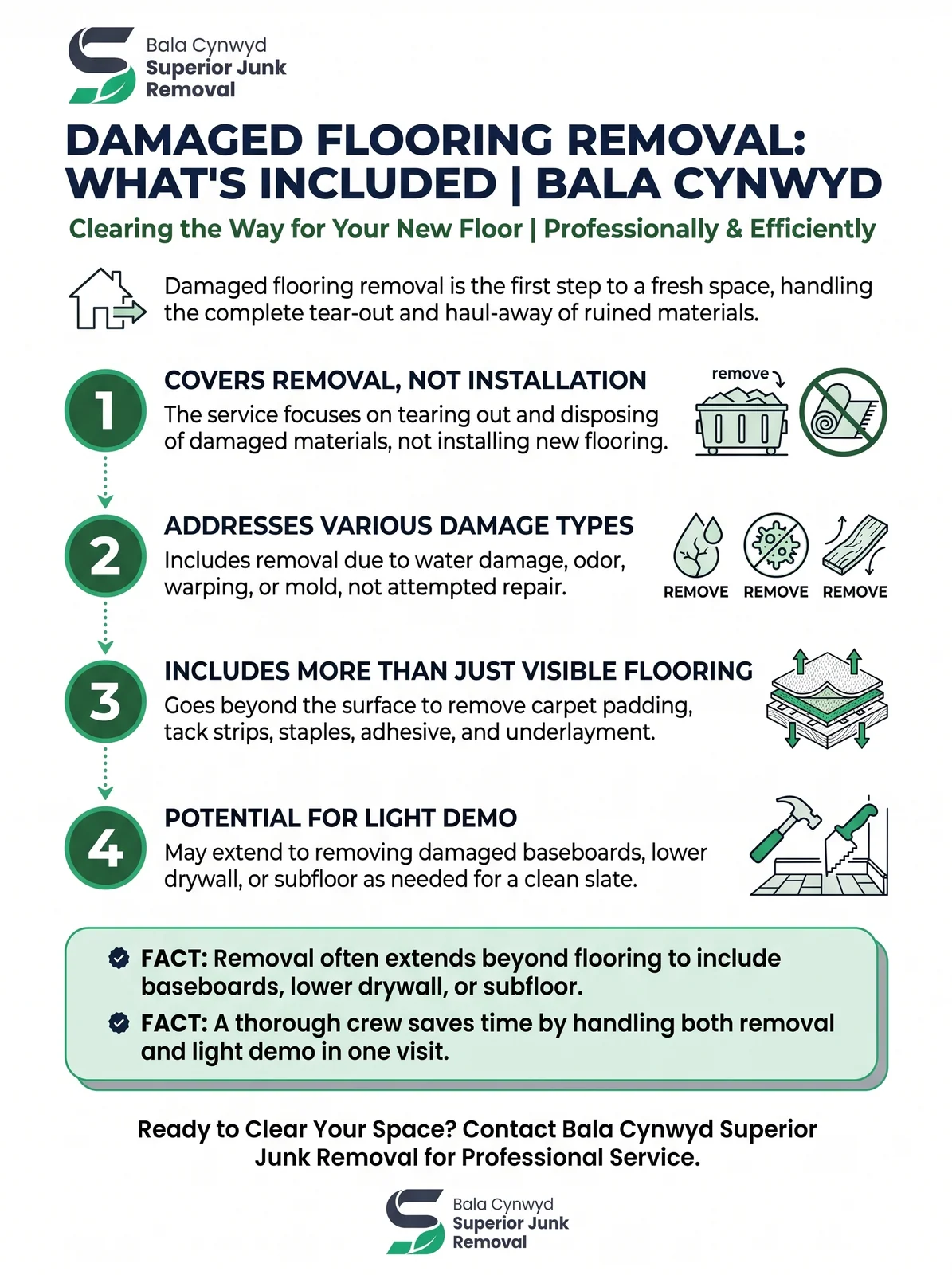
- Damaged flooring removal covers tear-out and haul-away, not new flooring installation.
- Water damage, odor, warping, or mold usually mean removal, not repair.
- Flooring damage often extends into baseboards, lower drywall, or subfloor.
- A crew that handles both removal and light demo can save you a second visit.
- Wall patching and finish repair are typically separate from demolition and haul-away.
What Damaged Flooring Removal Actually Covers
Damaged flooring removal means tearing out and disposing of flooring materials that are beyond saving. This includes carpet, carpet padding, tack strips, staples, laminate planks, vinyl sheeting, tile, and hardwood boards. It’s a removal and haul-away service, not an installation service — the goal is to clear the space so it’s ready for whatever comes next.
The job usually involves more than just the visible flooring. Underneath carpet, you’ll find padding and tack strips. Under tile or vinyl, there may be old adhesive or a damaged subfloor layer. A thorough junk removal in Bala Cynwyd crew accounts for all of these layers, not just what’s on top.
Signs Your Flooring Needs Removal, Not Repair
Not every damaged floor needs to come out — but certain signs make removal the safer, more practical choice. Watch for these red flags:
- Water stains, discoloration, or a musty smell that won’t go away
- Visible mold or mildew growth, especially near edges or seams
- Warping, buckling, or bubbling in laminate, vinyl, or hardwood
- Persistent pet odor that cleaning hasn’t solved
- Carpet that’s matted, stained, or torn beyond spot repair
If your situation involves years of buildup or a property that’s been neglected, the flooring damage may be tied to a larger cleanup. In those cases, hoarder cleanout services often address flooring alongside the rest of the space.
Why Flooring Removal Rarely Stops at the Floor
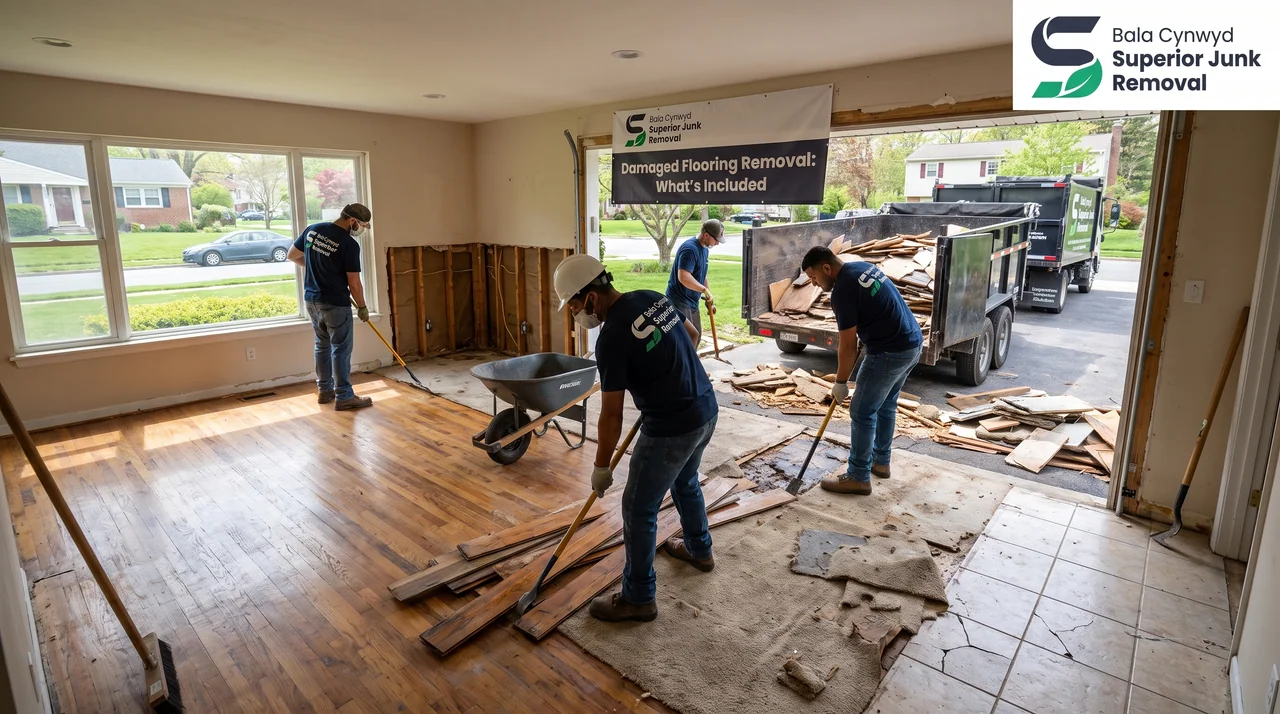
Damaged flooring almost always affects what’s around it. Water that ruins carpet often reaches baseboards and the bottom few inches of drywall. Adhesive removal from tile can chip subfloor edges. This is why so many homeowners, like one recent caller who wanted carpet pulled up plus drywall knocked down and walls patched, end up requesting several services in a single visit.
Bundling these tasks makes practical sense. One crew, one day, one mess to clean up — instead of scheduling separate contractors and living with disruption twice. This is especially common during a larger project, such as estate cleanout services, where flooring, walls, and old furnishings often need attention at the same time.
Drywall Demolition and Wall Patching — Where They Fit
Here’s the honest breakdown: knocking down damaged drywall and hauling away the debris is demolition work, and many junk removal crews handle it as part of a combined job. Light demolition services typically cover removing small sections of drywall, cabinets, or flooring debris.
Wall patching, mudding, sanding, and repainting are a different skill set — usually the work of a drywall or painting contractor. If you’re wondering whether one company does both, the honest answer is: removal and demo, often yes; finished patching and paint, not always. [Verify with Bala Cynwyd Superior Junk Removal directly which of these services they perform in-house.]
The Step-by-Step Removal Process
Knowing what to expect helps you plan around the work and avoid surprises on the day of.
1. On-Site Assessment and Quote
An accurate quote requires seeing the space. Square footage, material type, access (stairs, tight hallways), and any adjacent damage all affect pricing. This is why a phone estimate alone is rarely precise — a walk-through or clear photos give a much more reliable number.
2. Tear-Out and Safe Handling
Carpet gets cut into manageable sections, padding is pulled up, and tack strips or staples are removed carefully to avoid injury. Glued-down tile or vinyl takes more time due to adhesive. If moisture or mold is present, crews take precautions to limit dust and contain the affected area.
3. Hauling and Eco-Friendly Disposal
Once everything is pulled up, it needs to leave the property. A full-service crew loads and hauls the debris, sorting out materials that can be recycled or donated instead of sent straight to a landfill. This is a detail many homeowners don’t think to ask about — but it matters, both for the environment and for keeping disposal costs reasonable. It’s also where construction debris removal overlaps with flooring jobs, since both involve similar hauling and sorting.
What Affects the Cost of Flooring Removal
There’s no single flat rate for damaged flooring removal, because too many variables change the scope. Here’s a general breakdown of what typically influences price:
| Factor | Why It Matters |
|---|---|
| Square footage | More area means more labor and disposal volume |
| Material type | Carpet is easiest; glued tile or hardwood takes longer to remove |
| Number of rooms | Multiple rooms add setup and hauling time |
| Stairs or tight access | Harder access slows removal and increases labor |
| Moisture or mold | May require extra precautions or containment |
| Adjacent demo work | Drywall removal adds scope beyond flooring alone |
[Verify current pricing directly, as exact figures depend on the specifics above and should be confirmed on-site.] This is exactly why an on-site look — not a phone guess — gives you the most honest number.
Removing It Yourself vs. Hiring a Crew
DIY carpet removal is doable for a single small room if you’re comfortable with physical labor and have a way to haul debris away. But it gets complicated fast once you find hidden water damage, moldy subfloor, or need to deal with heavy tile and adhesive. Hiring a crew makes the most sense when:
- The damage covers multiple rooms or a large area
- You suspect mold, water damage, or subfloor issues
- You want drywall demo handled in the same visit
- You’d rather not deal with disposal logistics yourself
A hands-off approach means you don’t need a truck, a dumpster rental, or a free weekend — the crew handles pull-up, hauling, and cleanup from start to finish.
Getting an Accurate Quote for Your Project
Before requesting a quote, gather a few details: the number of rooms involved, an approximate square footage, the flooring material, photos of the damage, and whether you also need drywall or wall work addressed. This helps the crew give you a realistic estimate before they even arrive.
Homeowners across the Main Line, including those near junk removal in Ardmore and junk removal in Broomall, can reach out to Bala Cynwyd Superior Junk Removal for an on-site assessment. Check the full list of areas we serve to confirm coverage near you.
Have damaged carpet, drywall, or wall repair questions? Call Bala Cynwyd Superior Junk Removal at 6107952362 for a free, no-pressure quote on your flooring removal project.
Frequently Asked Questions
Can one company remove carpet and knock down drywall in the same visit?
In many cases, yes. A junk removal crew that offers light demolition can pull up damaged flooring and knock down small sections of drywall in one visit, hauling everything away together. [Verify directly which combined services Bala Cynwyd Superior Junk Removal offers for your specific job.]
Does flooring removal include wall patching?
Usually not. Removal and demolition cover tearing out materials and hauling debris. Patching, mudding, sanding, and repainting are finish work, typically handled by a drywall or painting contractor as a separate step.
Do I need to be home during the removal?
You’ll need to be available for the initial assessment so the crew can see the space and confirm scope. After that, many jobs can run with minimal involvement from you — a hands-off approach that lets the crew handle tear-out and hauling without disrupting your day.
Who disposes of the old carpet and debris?
A full-service crew loads and hauls away everything they remove, sorting materials for recycling or donation where possible. This saves you from renting a dumpster or making landfill runs yourself.
How much does damaged flooring removal cost?
Cost depends on square footage, material type, number of rooms, access, and whether adjacent demo work is included. An on-site look gives the most accurate number — a phone quote alone can only offer a rough range. [Verify current pricing details directly.]
What should I do before the crew arrives?
Clear furniture from the area where possible, note any problem spots like soft flooring or visible mold, take a few photos beforehand, and mention any moisture concerns when you request your quote. This helps the crew move faster once they’re on-site.
Next Steps
If your damaged carpet, drywall, or flooring situation sounds like more than a weekend DIY project, an on-site quote is the fastest way to get real answers. Learn more about our junk removal team or reach out directly to schedule an assessment for your home in Bala Cynwyd or nearby towns like Darby and Yeadon.
Ready to get your damaged flooring assessed? Contact Bala Cynwyd Superior Junk Removal at 6107952362 or contact us for a free quote today.